


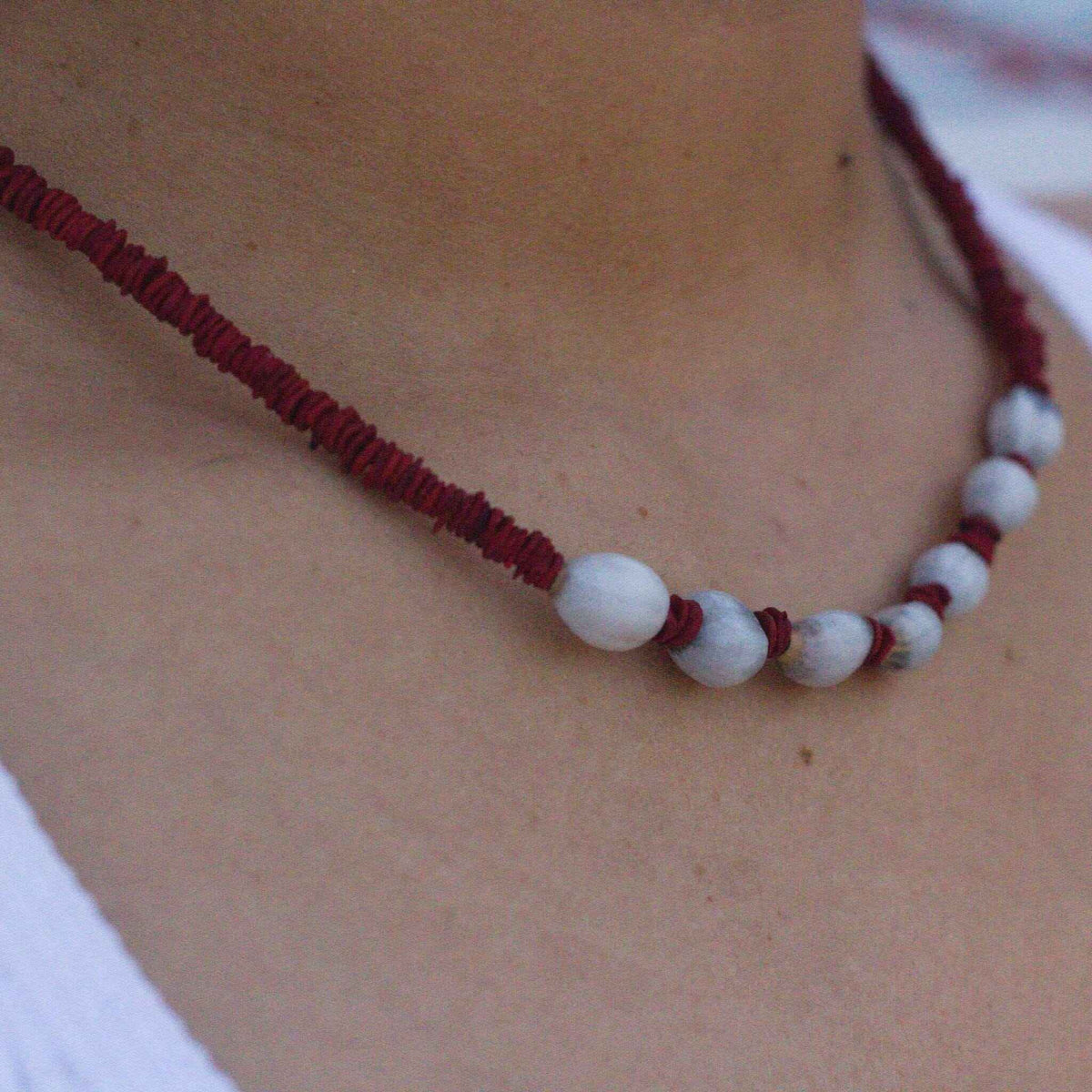
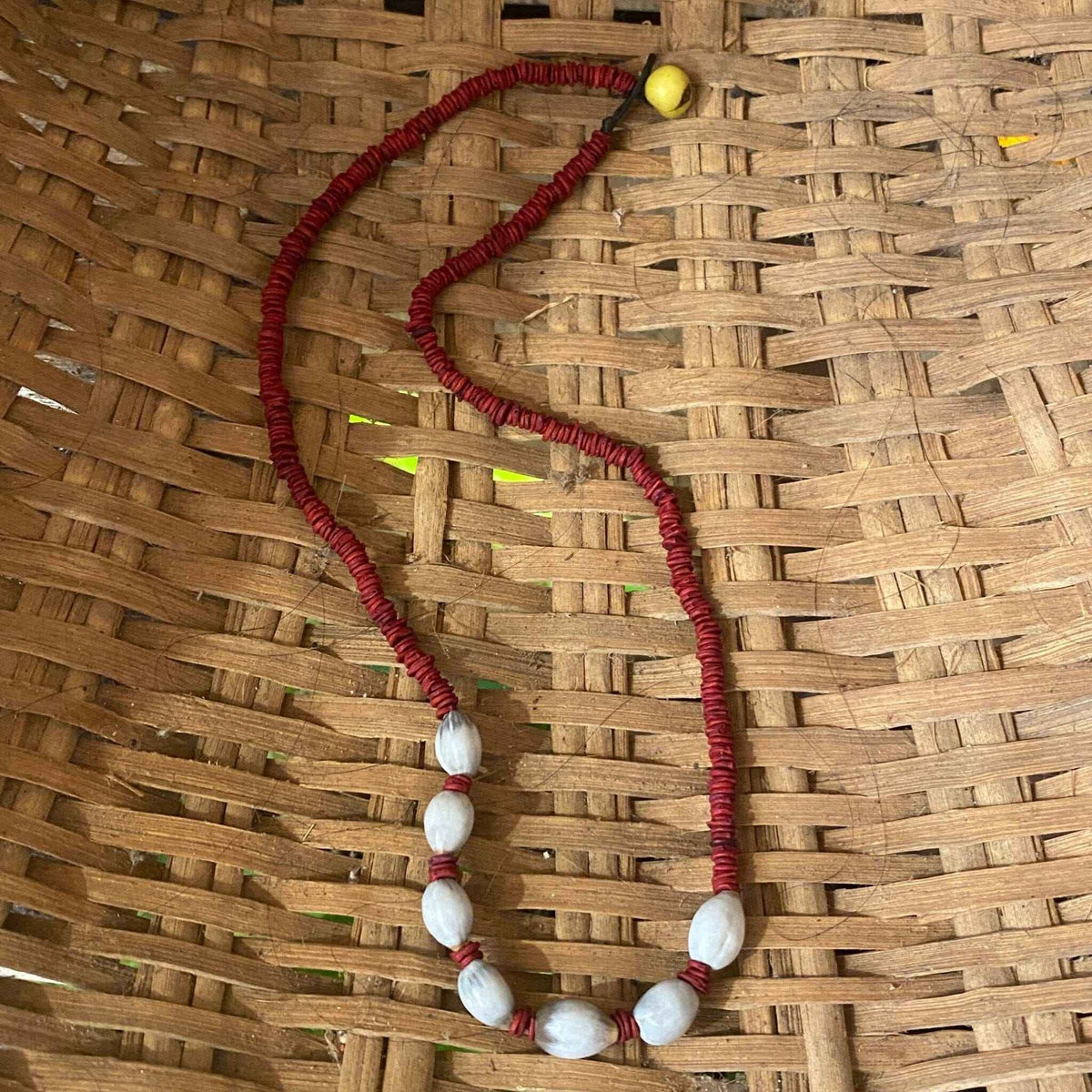
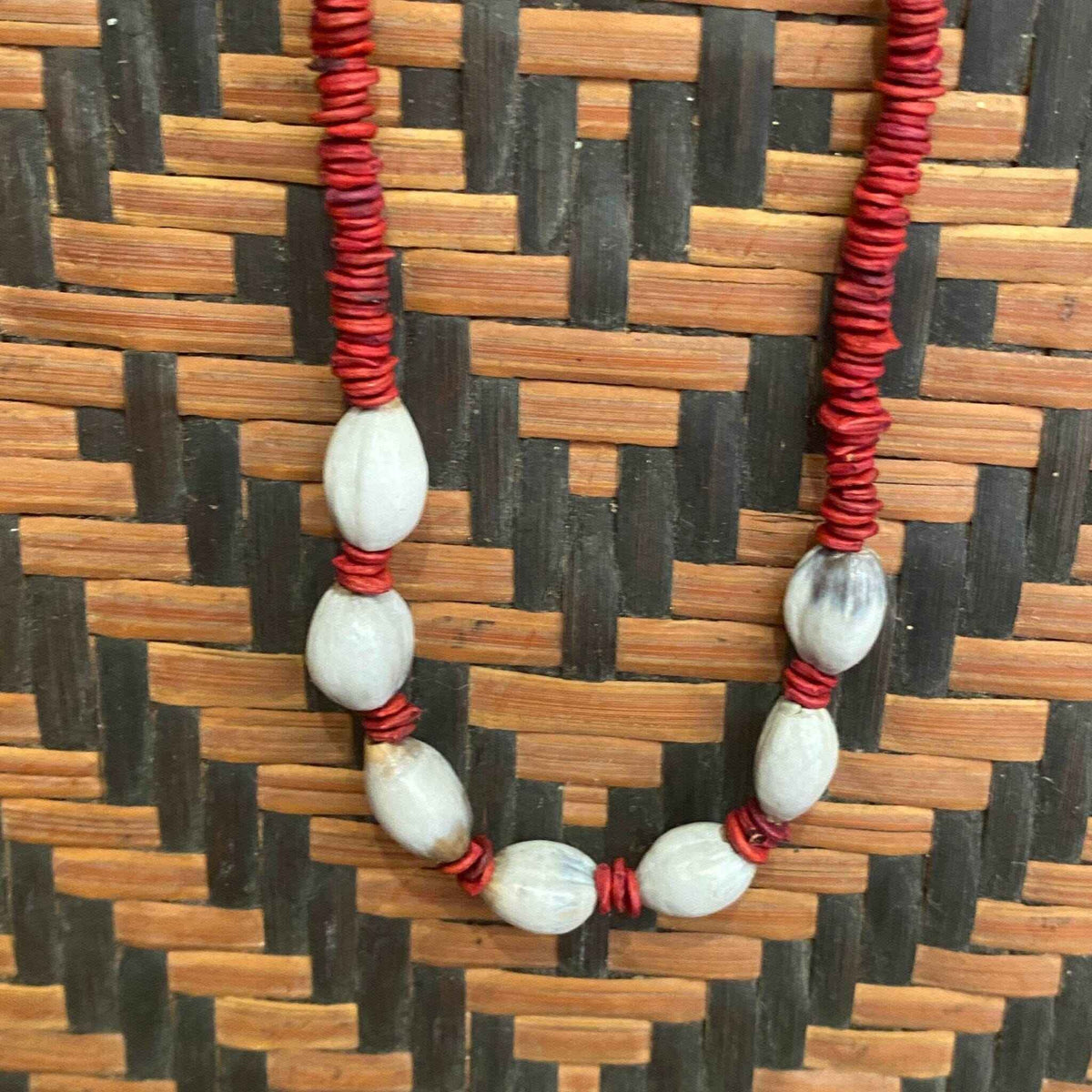
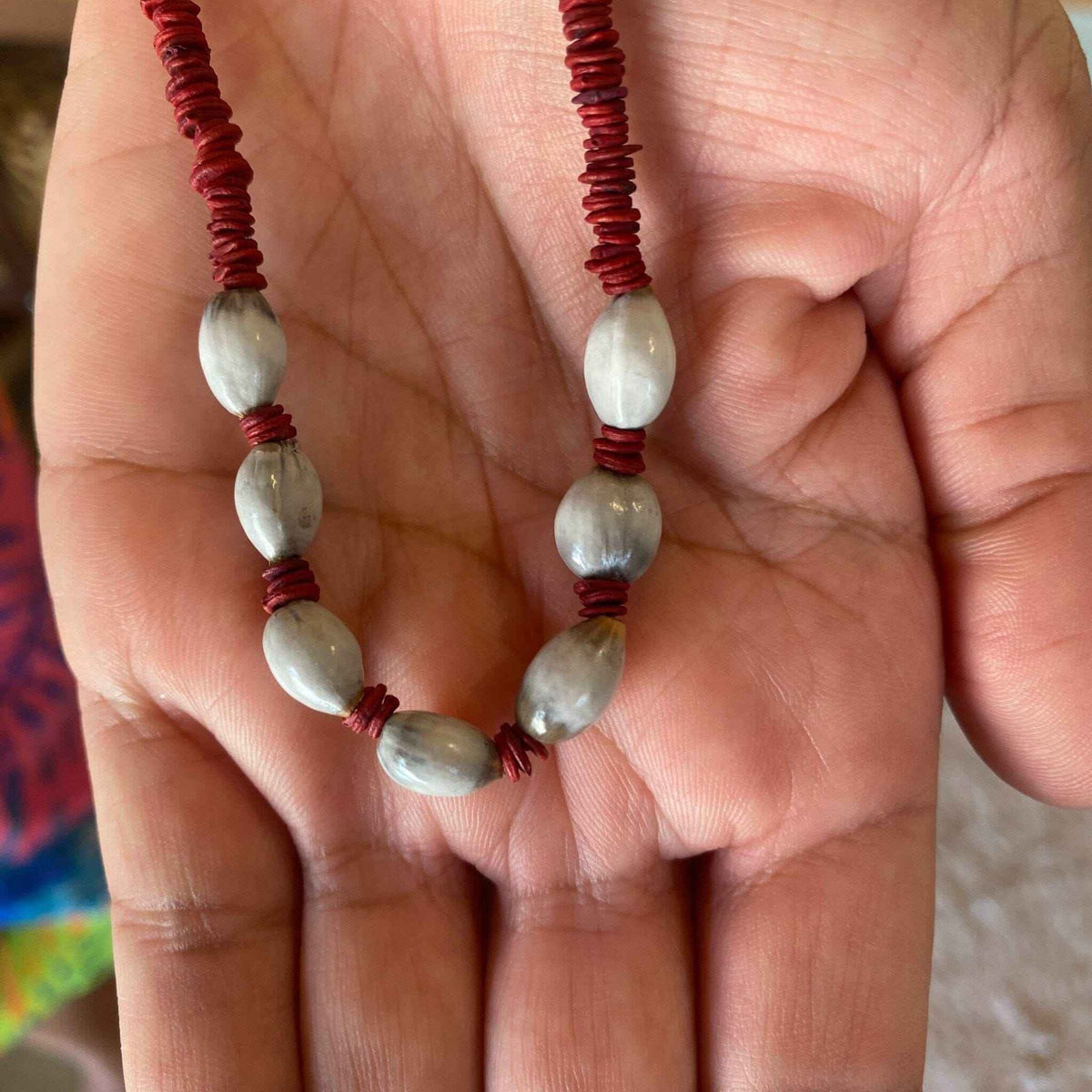
Red morototo seed necklace and Job's tears choker
Red morototo seed necklace and Job's tears choker
Couldn't load pickup availability
Creation in detail
Handcrafted
Size: 20 cm
Weight: 6 g
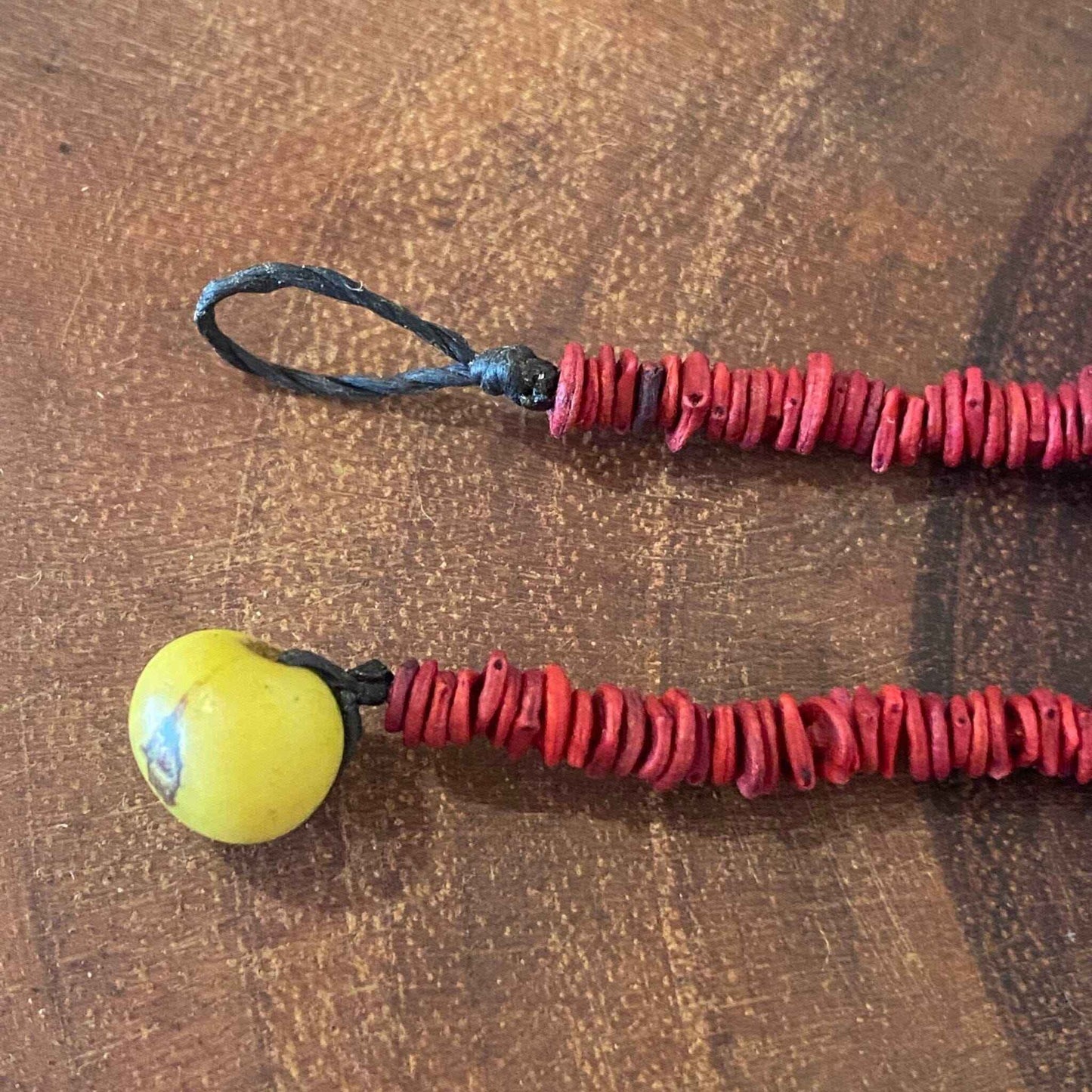
Materials: natural morototo (Didymopanax morototoni) seeds and Job's tears
Type: choker necklace with clasp
Colors: red and greyish white
Origin: Artisan from the Jamaraqua women's community located on the banks of the Tapajos River, in the state of Para, Brazil.
Learn more about the Jamaraqua community.
Morototo, plant material
Morototo (Didymopanax morototoni) is presented here in its natural state, to show the plant material at the origin of this artisanal creation.

Job's tears, natural seeds
Job's tears (Coix lacryma-jobi) are naturally hard seeds, used in various artisanal traditions. Their shape and surface allow them to be integrated directly into jewelry compositions.


How to wear it
Choose plain clothing in neutral tones such as white, beige, light grey, or black. These colors will allow the jewelry to stand out without visual distraction.
This necklace pairs perfectly with clothing made from natural materials like linen, cotton, or hemp. A white linen shirt or a light cotton dress will ideally complement this jewelry.
This necklace integrates perfectly into a unique style. Pair it with a long flowy dress or a maxi skirt for an elegant and casual summer look.

Every piece of jewelry tells a story
Sourced from artisan partners in Brazil, Amazonikaa creations tell stories of regions, expertise, and encounters. Jewelry chosen for its uniqueness, aiming to bring a piece of Brazil and its living heritage to Europe and the rest of the world.