

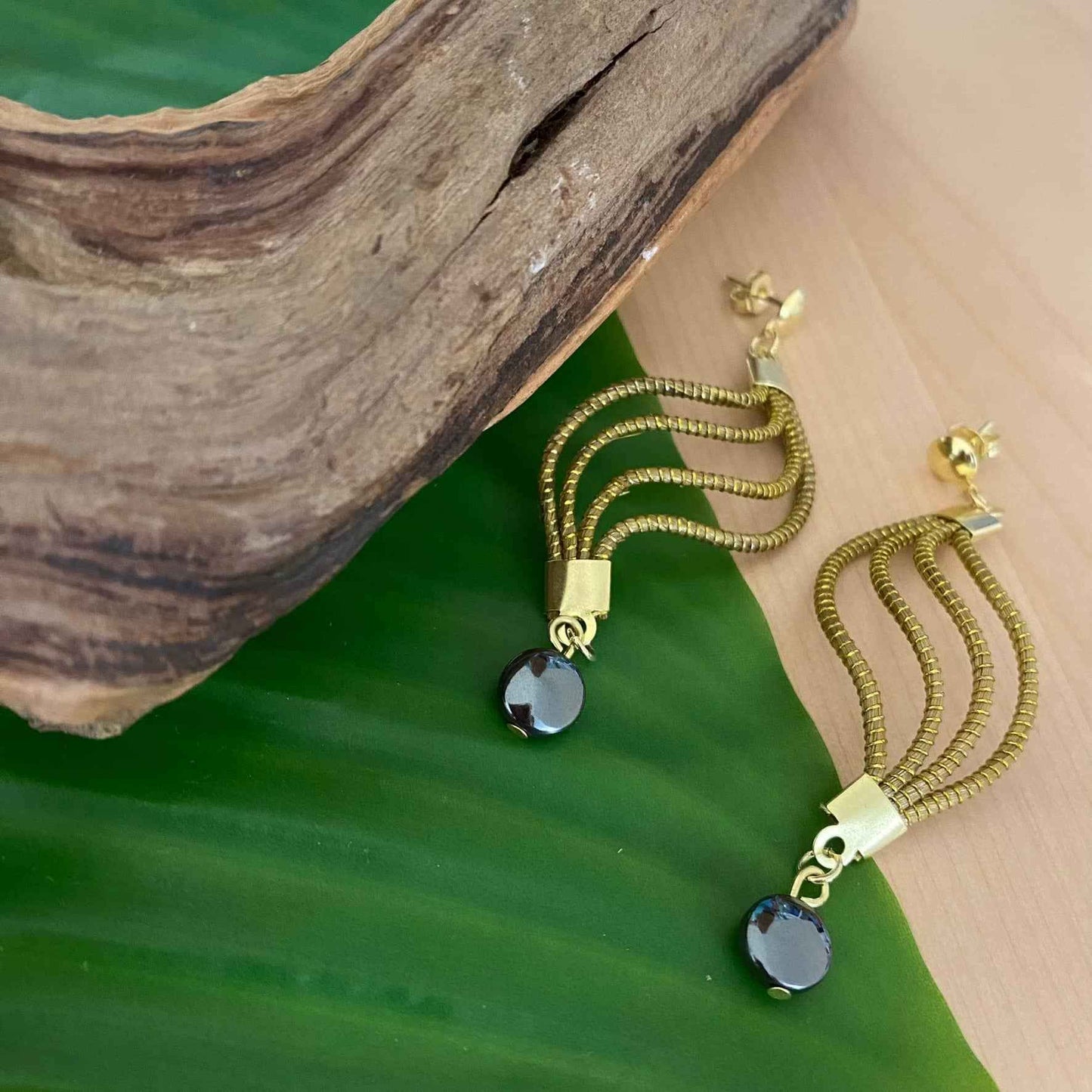
Capim Dourado wave earrings and natural hematite stone
Capim Dourado wave earrings and natural hematite stone
Couldn't load pickup availability
Capim Dourado (Syngonanthus nitens) and natural stone earrings
Dimensions and weight
The design in detail
Handcrafted
Size: 5 cm
Weight: 7 g
Materials: capim dourado (naturally golden grass) and natural stone, mounted with brass clasps, 3-micron gold-plated, guaranteed free of toxic metals (cadmium, nickel, or lead), in accordance with European standards.
Natural stone: hematite (Fe₂O₃), polished, 8 mm, hardness 5.5 to 6.5
Type: wave and natural stone
Color: golden and shiny black
Origin: Local artisan working with Capim Dourado in the state of Tocantins in central-eastern Brazil
Capim dourado jewelry, or "golden grass," are artisanal treasures from Brazil, created from grass native to the Jalapão region. Local artisans skillfully weave this natural grass to produce unique pieces, ranging from bracelets to earrings. The distinctive golden hues of these jewels capture the radiance of the Brazilian sun, adding a touch of nature and elegance to every creation.
More information about Capim Dourado.
How to wear them
To highlight the contrast of these earrings, opt for outfits in neutral tones (off-white, beige, sand, or light gray) for a balanced and luminous look.
A fluid linen top, a light cotton blouse, or a natural crepe dress will enhance the artisanal and soft character of the jewelry, emphasizing its sophisticated simplicity.
Utilize the soothing shades of the jewelry in a romantic bohemian look: a airy pastel dress, a flowing skirt, or lightly textured pieces will beautifully accompany these earrings.
These earrings draw attention to your face. To highlight them, opt for an updo, a half-up hairstyle, or simply hair pulled back for an elegant and modern look.

Every piece of jewelry tells a story
Sourced from artisan partners in Brazil, Amazonikaa creations tell stories of regions, expertise, and encounters. Jewelry chosen for its uniqueness, aiming to bring a piece of Brazil and its living heritage to Europe and the rest of the world.