


Coral necklace in glass beads - white red black
Coral necklace in glass beads - white red black
Couldn't load pickup availability
Dimensions and weight
Diameter: 190 mm
Weight: 23 g
The creation in detail
Hand-woven
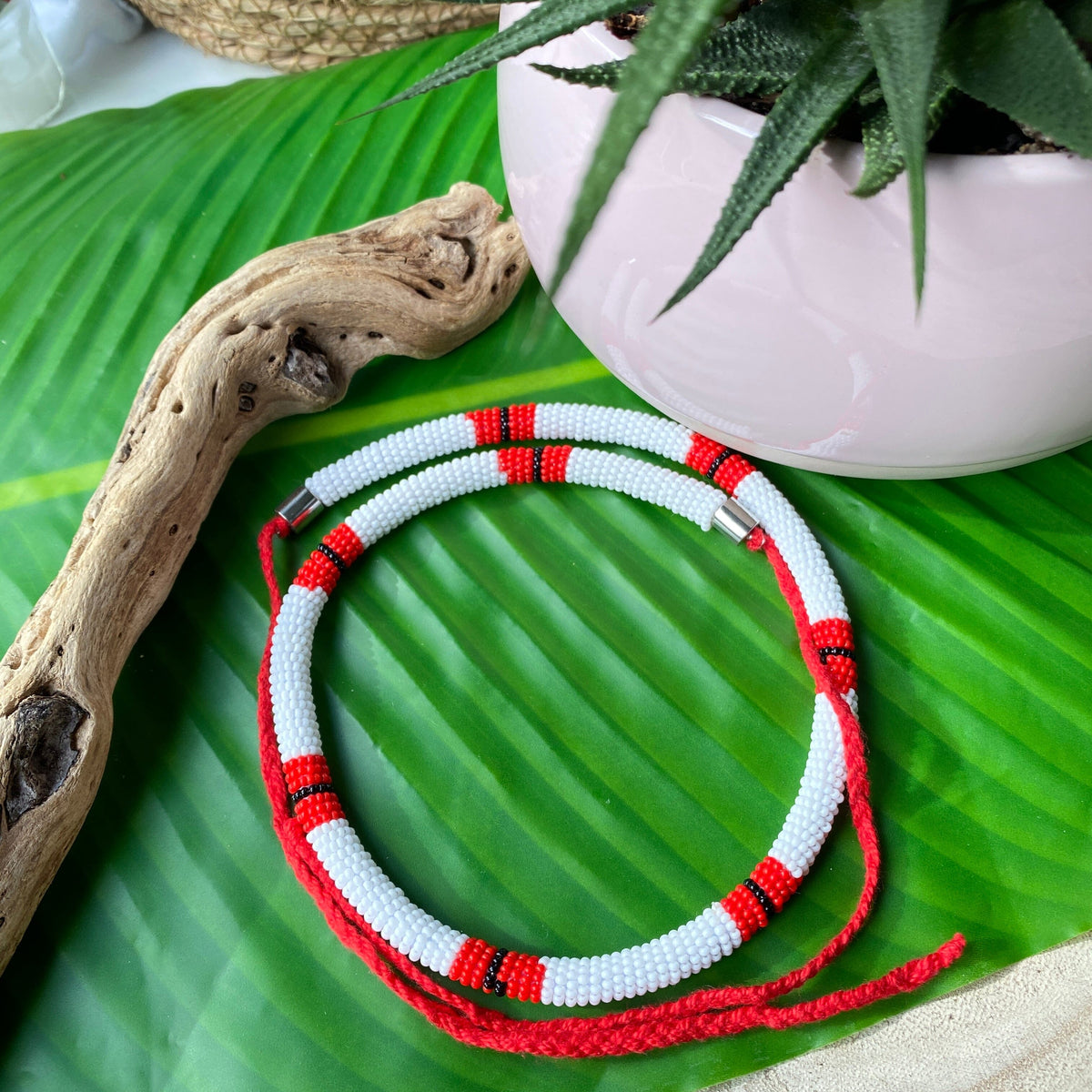
Length when open: 40 cm
Thickness: 7 mm
Materials: glass beads. In Brazil, a "Miçanga" refers to a small colored glass bead, used in the craftsmanship of indigenous peoples to make traditional jewelry.
Colors: white, red, and black
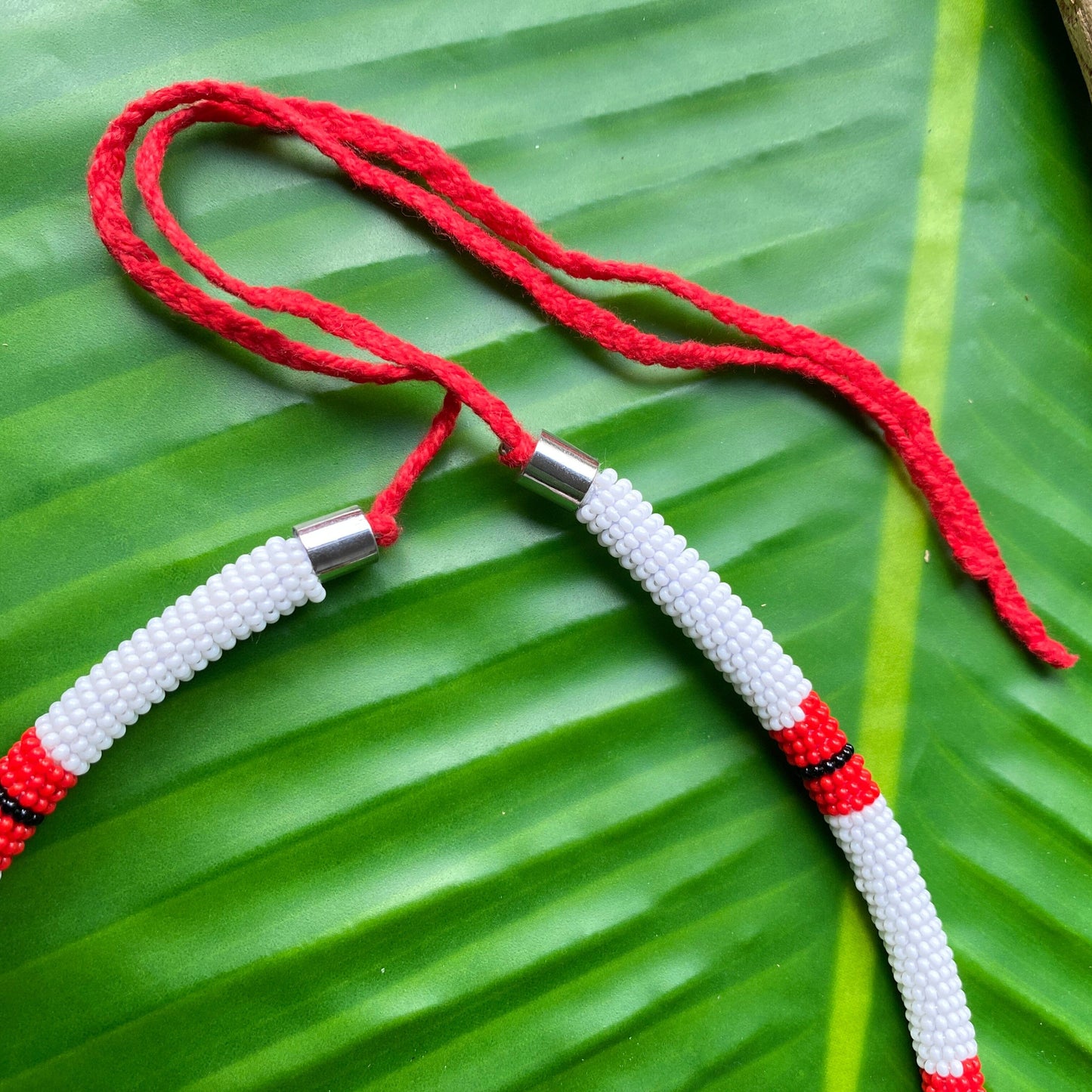
Lace closure
Type: coral necklace
Origin: artisan from the Borari ethnic group, located in the state of Pará in Northern Brazil.
The coral snake, source of inspiration
The pattern of this creation evokes the coral snake (Micrurus corallinus). This documentary image helps connect the jewelry's design to the animal that inspired it.

How to wear it
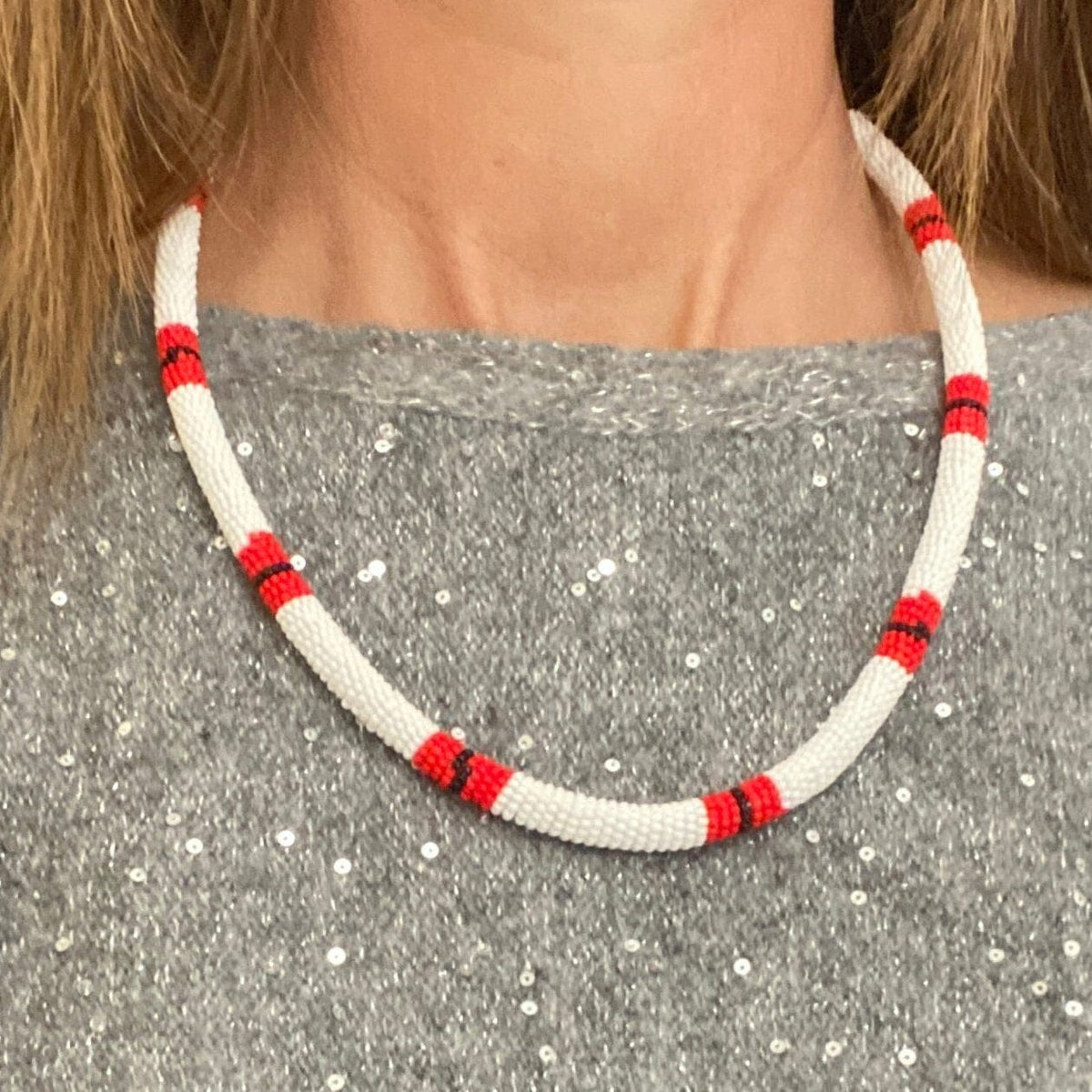
Wear this necklace over a solid top in sober tones like beige, light gray, or off-white to highlight its brilliance while maintaining a refined aesthetic.
Pair it with a slightly textured turtleneck or a structured light-colored blouse. The contrast will be subtle yet sophisticated.
A white blouse, a light blazer, or a tailored shirt will bring out the uniqueness of the piece while maintaining a professional silhouette.
Let the necklace be the centerpiece of your outfit. Avoid overcrowding it with other necklaces. If necessary, a minimal white bead bracelet or delicate earrings are enough to complete the look with grace without distracting attention.


Every piece of jewelry tells a story
Sourced from artisan partners in Brazil, Amazonikaa creations tell stories of regions, expertise, and encounters. Jewelry chosen for its uniqueness, aiming to bring a piece of Brazil and its living heritage to Europe and the rest of the world.