


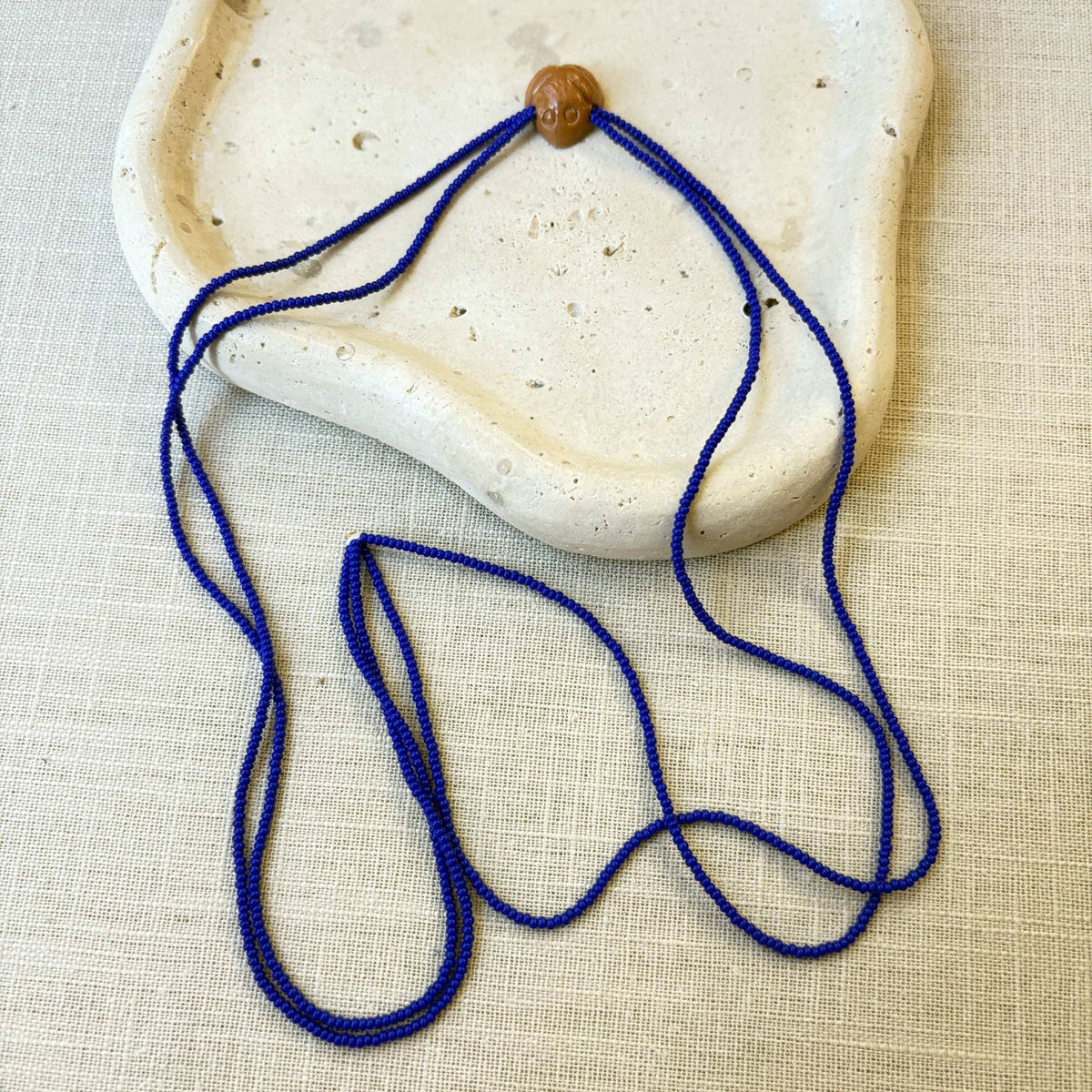
Glass bead necklace - blue and Muiraquitã pendant
Glass bead necklace - blue and Muiraquitã pendant
Couldn't load pickup availability
Dimensions and weight
Size: 30 cm
Weight: 5 g
The creation in detail
Hand-woven.
Thickness: 1 mm
Materials: glass beads. In Brazil, a "Miçanga" refers to a small colored glass bead, used in the handicrafts of indigenous peoples to make traditional jewelry.
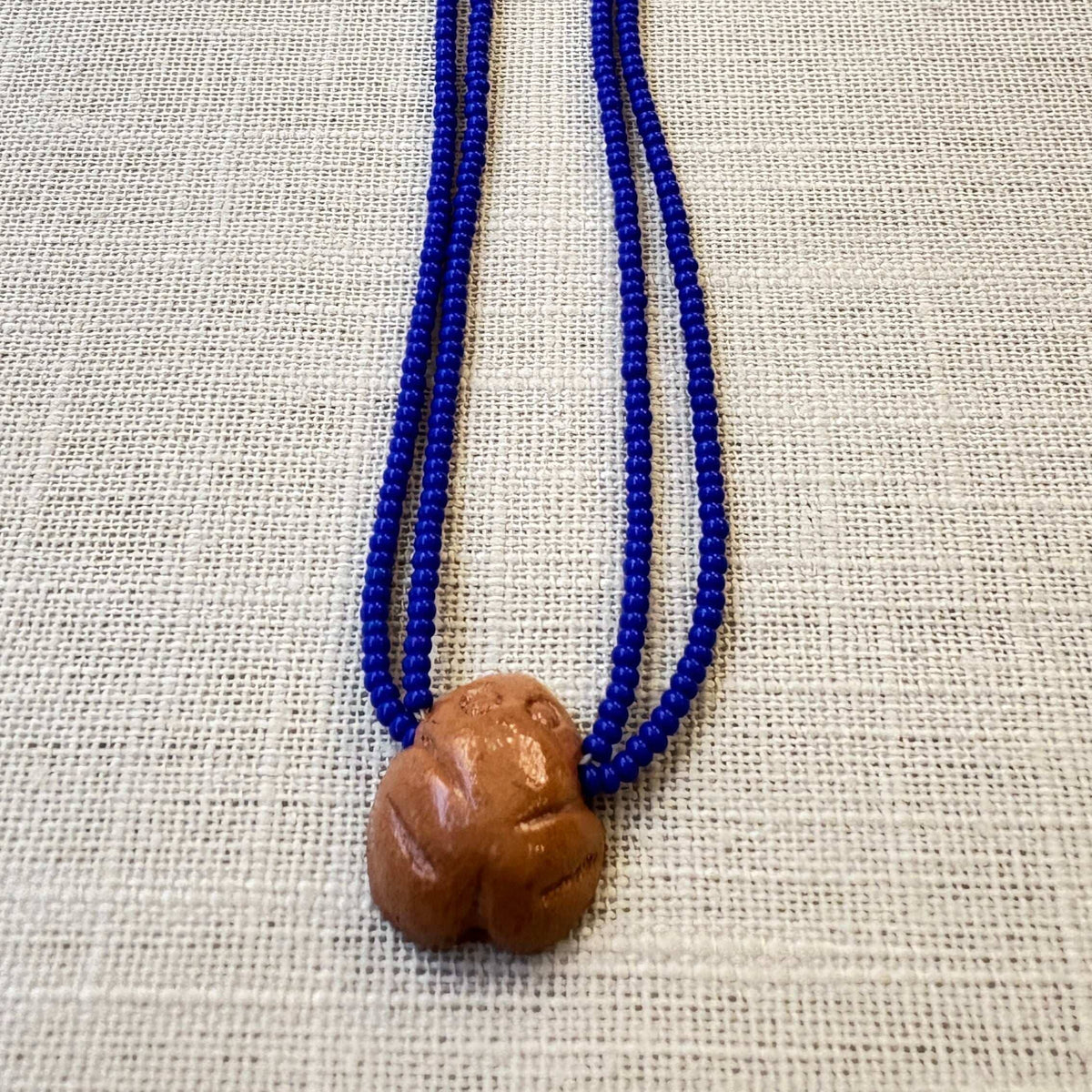
Colors: blue and brown pendant
Type: pendant necklace
Origin: artisan from the Borari ethnic group, located in the state of Pará in Northern Brazil.
blog about the legend of the Amazons and the Muiraquitã
The frog and the Muiraquitã
The frog is one of the forms associated with the Muiraquitã, an iconic amulet of the Amazon. This photograph is used as a documentary evocation of the motif: it does not seek to attribute a specific animal species to the Muiraquitã.

How to wear it
Wear this necklace over an off-white, beige, or light camel top to allow the warm tones of the necklace to stand out elegantly.
A solid-colored dress in soft tones, such as linen or sand, will create a cohesive and delicate summer vibe.
Let the necklace take center stage.
A minimalist white blouse or a casual blazer will provide a subtle canvas for this distinctive handcrafted piece.
Let the Muiraquitã be the focal point of your look.
Avoid bulky layered necklaces; prefer a few light accessories, such as discreet earrings or a thin golden Capim Dourado (Syngonanthus nitens) bracelet.
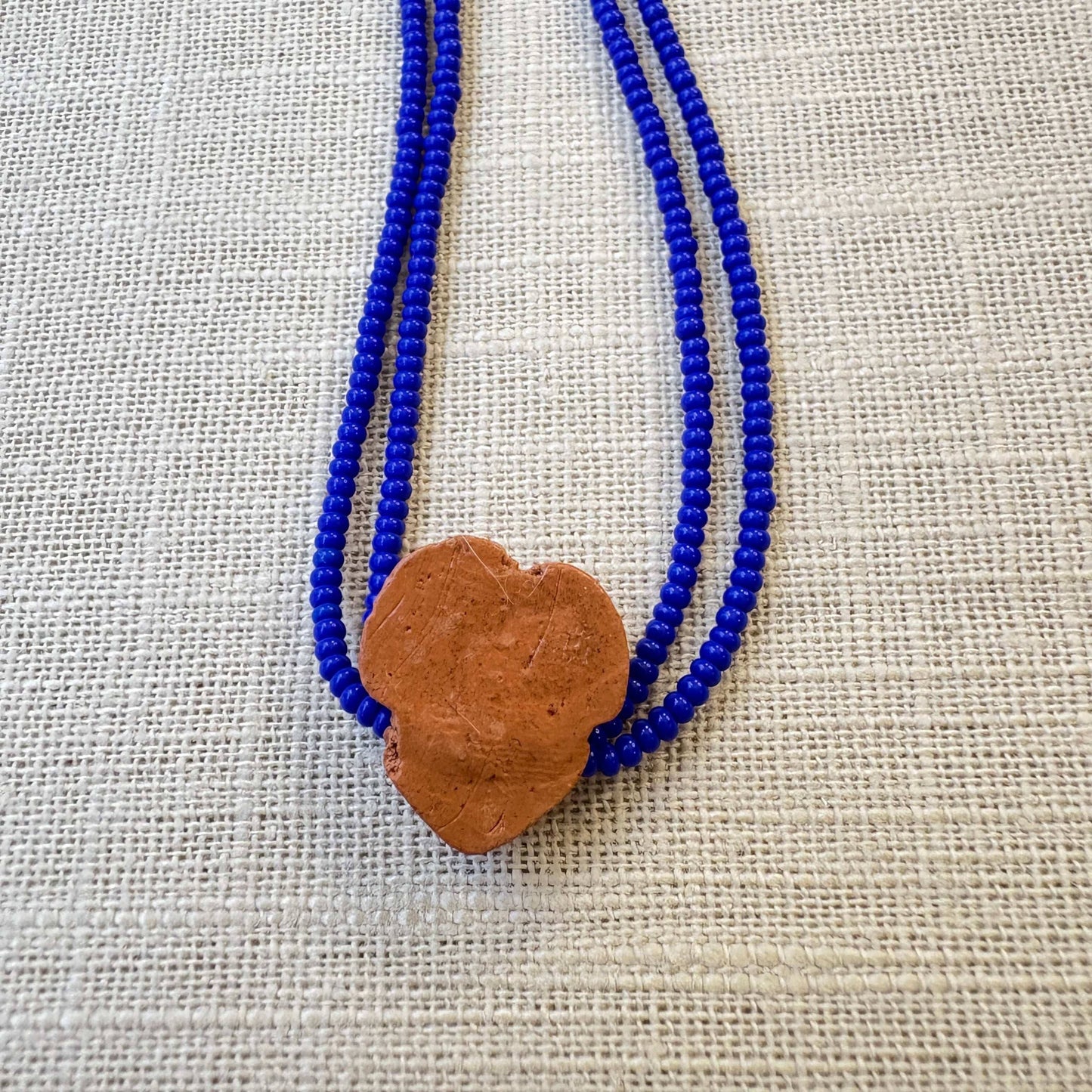
The Muiraquitã is a traditional Amazonian symbol, often made of clay.

Every piece of jewelry tells a story
Sourced from artisan partners in Brazil, Amazonikaa creations tell stories of regions, expertise, and encounters. Jewelry chosen for its uniqueness, aiming to bring a piece of Brazil and its living heritage to Europe and the rest of the world.